
Maritime Knowledge
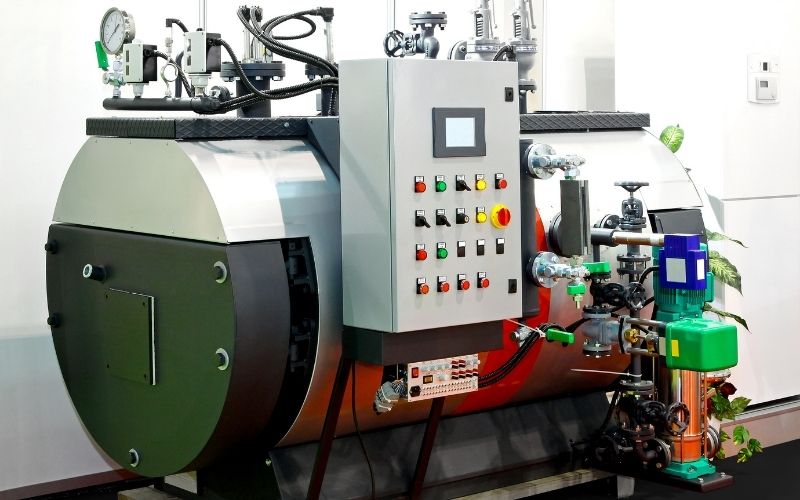
Working of Marine Boilers Explained
Boilers generate steam and have been used since the era of steamships, and are used to date. They utilise the heat index generated from engines and machinery onboard to produce steam vapour by boiling water at very high temperatures and pressures, and this steam is used for various utilities on the vessel that use heating systems. For tanker vessels carrying various forms of heavy fuel and bunker fuels, complex heating systems supply constant heat to the cargo so that they remain at the desired low viscosity levels necessary for transfer and distribution. In colder climates, this steam content is also used for areas like the sea chest and associated seawater cooling systems, cooling and heating lines, ballasting systems, freshwater reserves, and so on, frozen due to very low temperatures. Moreover, this steam is used for other purposes, such as driving several pumps, turbines, motors, equipment, and other machinery dependent on steam. Furthermore, steam is also used for various purposes for onboard consumption, like galley, air conditioning and heater systems, steam geyser systems, and so on. In the era of steamships, the steam from boilers was essentially routed, along with these utilities, to main and auxiliary engines that were powered by constant steam supply, and this was a means of constant replenishment in addition to the mainstream supply. The principle used in Boilers From a technical point of view, boilers used in ships are based on what is known as the principle of a waste heat recovery system. Though the terminology may seem new and pioneering, this simple concept has been used for ages, right from the era of steamships, as mentioned above. The heat index extracted from all relevant machinery is tapped to be utilised in boiling the water, generating steam at a very high-temperature gradient, which is then circulated suitably. How do