10 Strait Of Hormuz Facts You Must Know
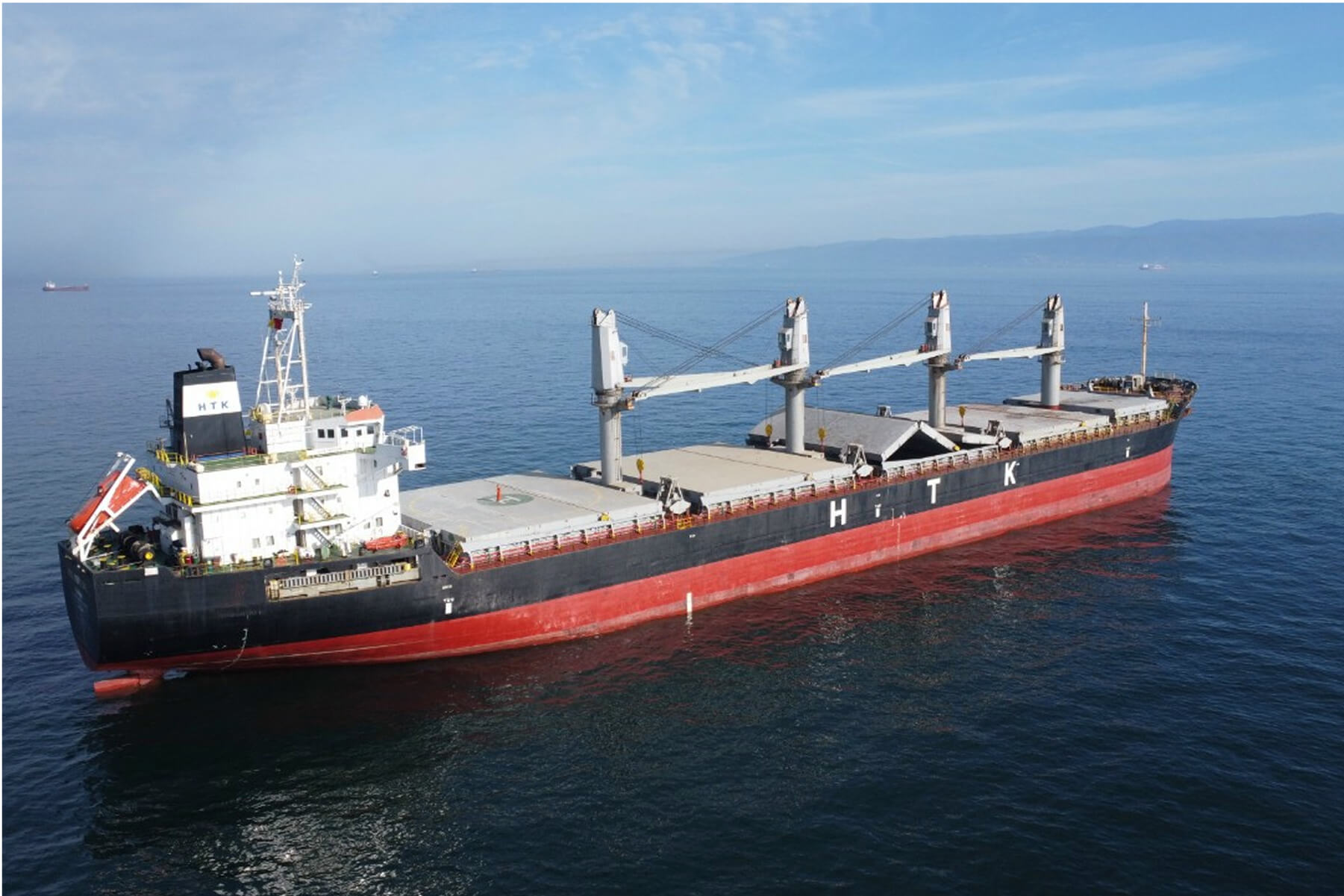
Situated between the Persian Gulf and the Gulf of Oman, the Strait of Hormuz offers the only route for ships sailing from the Persian Gulf to the open ocean waters.
It has been a vital conduit of maritime trade for centuries and has been mentioned in the memoirs of Emperor Babur, the first King of the Mughal Empire, as a gateway through which the finest almonds reached the global markets. Today, it is a critical chokepoint through which 20% of the world’s oil and gas passes.
In this article, let us explore the 10 important facts about the Strait of Hormuz.

1. Dangerous For Navigation
The Strait of Hormuz is 104 miles long, with a width ranging from 60 miles to 24 miles. It is around 33 kilometres or 21 miles wide at its narrowest point, making navigation here dangerous and difficult.
It also has strong tidal currents and unpredictable swells, along with reduced visibility due to summer dust storms and morning haze.
Ships have to slow down and sail carefully to avoid accidents or collisions.
For safety reasons, a traffic separation scheme has been implemented, wherein inbound and outbound vessels use two different lanes, each only 3.2 km or 2 miles wide, separated by another two-mile zone.
On the Strait’s north coast lies Iran, and on the south is the Musandam Peninsula, shared by the UAE and the Musandam Governorate, an exclave of Oman.
There are three major islands in the Strait, the Hormuz, Qeshm and Larak Islands, all of which belong to Iran, enabling it to control the strategic waterway, along with its navy, which uses small, fast-moving vessels equipped with missiles and drones to patrol the waters.
2. A Crucial Route For Oil and Gas Shipments
The Strait of Hormuz is the only path for oil and gas shipments from the Middle East to reach Asia. Otherwise, ships have to take the longer route around the Cape of Good Hope, Africa, which increases shipping costs and delays.
Thus, the Strait handles almost 20 million barrels of oil per day, roughly 20% of global petroleum consumption. For the maritime industry, this is a massive concentration of Very Large Crude Carriers (VLCCs) in a very small geographic area.
It is also the sole exit point for massive LNG shipments, mainly from Qatar. Unlike oil, which can be stored for a significant period, LNG supply chains are ‘just-in-time’, and a disruption or closure of the Strait can hit Europe and Asia badly.
This is what is happening currently, as the US-Iran war continues. Though Iran has not officially blocked the Strait, it has warned ships that if they try to pass through the waterway, they might be attacked.
Since most ship traffic through Hormuz flows to the east, with 80% of crude destined for Asia, especially China, India, Japan and South Korea, this makes the war a great concern for the economies except China, whose vessels have been given a safe passage through the Strait by the Iranian government.
On the other hand, countries such as India are struggling with LPG shortages, with many restaurants and hotels, especially in the southern part of the country, struggling to remain open, while others are resorting to wood-fired traditional stoves.
3. Insurance is the invisible hand that controls the Strait
The insurance situation in the Strait is defined by a lack of coverage for environmental disasters and extreme financial volatility for standard maritime risks.
The Strait is designated as a “High Risk Area” by the International Transport Workers’ Federation, and crews have the legal right to refuse to sail, leading to additional “danger pay” costs that insurers must account for in liability policies.
However, currently, military conflict is at the forefront, which has led to a spike in the war risk premiums to more than 0.4% of a ship’s hull value per crossing. For a 150 million dollar superanker, this adds an extra 600,000 U.S dollars in costs for a single passage, making trips unviable.
Additionally, after many ships were targeted as the situation between the US and Iran escalated, shipping giants like Maersk and MSC suspended transits via the Strait.
4. Limited Bypass Infrastructure
A misconception is that pipelines can replace the Strait or help in times of crisis; however, this is far from true.
The combined bypass capacity of Saudi Arabia’s East-West Pipeline and the UAE’s Abu Dhabi Pipeline is around 9 million bpd, which leaves over 11 million bpd, more than 10% of global demand, with no alternative but water.
Also, per the UN Convention on the Law of the Sea (UNCLOS), ships have the right of transit passage through international straits, but Iran has argued that this applies to those countries that have ratified UNCLOS, which the U.S has not, and so this is used as a justification by the IRGC to intercept or board commercial ships.
5. One of the noisiest underwater environments
Per Oceanographers, the Hormuz Strait is one of the noisiest underwater environments in the world. There is a constant thrum of ship engines, and military sonar is also used extensively in the region, making the marine environment so cluttered that it interferes with the communication and navigation of local dolphins and porpoises.
6. Home to heat-resistant Super Corals
The corals in the Persian Gulf and Strait of Hormuz are among the most-heat tolerant on earth, often thriving in temperatures that exceed 36°C (97°F). While the tropical corals usually bleach and die when water temperatures stay above 32°C, these “super corals” thrive in temperatures 2–3°C higher than those experienced by most coral reefs worldwide.
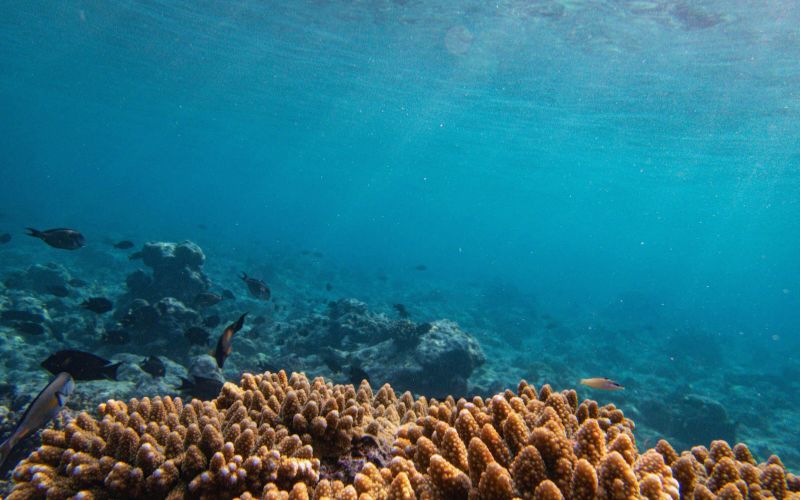
Scientists say that high salinity, extreme summer heat and cold winters led corals to adapt to their environment over 15,000 years.
Marine biologists at NYU Abu Dhabi and the Australian Institute of Marine Science are studying these corals to determine if their genes can be used to help restore global reefs like the Great Barrier Reef.
7. A young geological formation
The Strait of Hormuz is a relatively young formation which came into existence due to the rapid convergence of the Indian and Eurasian tectonic plates, which fractured the Musandam Mountains, also known as the fjords of Arabia. This tectonic movement ripped the waterway open, connecting the Persian Gulf to the Indian Ocean.
8. The Legend of the “Red Island”
The Hormuz Island, which lies at the mouth of the Strait, is often referred to as the Rainbow Island. It is famous for its red soil, which is so bright and vibrant that it’s used for cosmetics, paints and even in making utensils. To the sailors passing by the island, its red beaches make he surrounding waters look like blood, a hauntingly beautiful sight.

9. World’s 2nd Largest Dugong Population & Whale Shark Corridor
Seagrass is abundant in areas close to the strait, and these shallow waters are home to the world’s second-largest dugong population, the first being in Australia. These gentle mammals are affected by the noisy environment and heavy maritime traffic in the region.
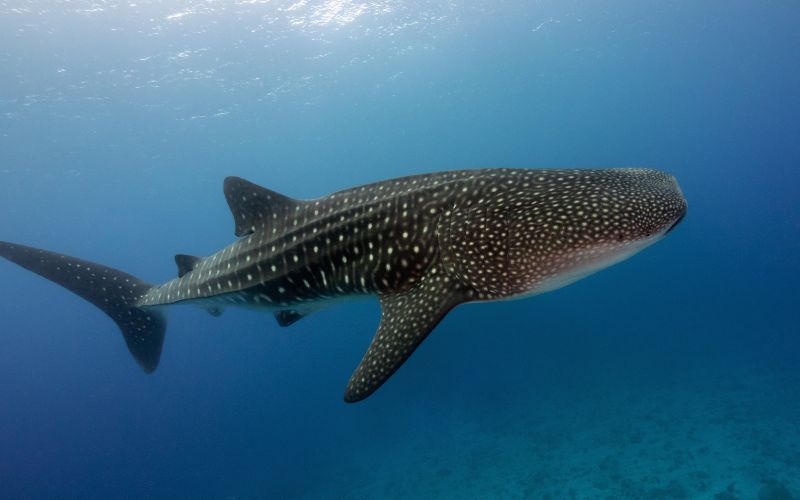
The Strait of Hormuz also serves as a migratory route for Whale Sharks, which swim through the narrow channel to reach the feeding grounds in the Gulf region. Satellite images show that they navigate the same shipping lanes as the oil tankers and other vessels, which makes them susceptible to accidents such as collisions with ships or injury from ship propellers.
10. The 4,000-Year-Old Lapis Lazuli Route
Before oil-laden vessels were a common sight in the Strait, it was a major trade route connecting the Mesopotamian and Indus Valley civilisations. A trade flourished, merchants and traders moved luxury items such as ivory, copper and Lapis Lazuli, through these waters in wooden dhows.
Other news
5 Important Responsibilities Of Ship Agents

Charity Program: Gift Giving for Local Families
Maritime Industry Outlook in 2026: Opportunities or Challenges for Vietnamese Shipowners?
Caribbean authorities enhance search and rescue coordination